ART DIRECTION
Kotsanas Museum of Ancient Greek Technology
Located in the heart of Athens, the Kotsanas Museum of Ancient Greek Technology is housed in a historic Art Nouveau listed building at the corner of Pindarou 6 and Akadimias Street, in Kolonaki. The museum presents the exhibition “The Hi‑Tech Inventions of Ancient Greece – The Origins of Our Modern Technology”, featuring approximately 100 reconstructed inventions that reveal the advanced technological thinking of Ancient Greek civilization.
Alongside this main exhibition, the building permanently hosts an independent exhibition of Ancient Greek Musical Instruments, comprising 42 fully functional, reconstructed instruments.
Expertises
Services

My Role
Museum Art Director & Exhibition Designer
I collaborated closely with the museum owners from the earliest stages of the project, shaping the conceptual direction and translating it into a coherent spatial and visual experience.
My role spanned from defining the exhibition narrative to overseeing how architecture, graphics, and content worked together across the entire building.
Scope of work included:
-
Exhibition concept and narrative structure
-
Spatial zoning and organization of the multi-level building
-
Interior design guidelines and renovation direction
-
Color systems, materials, lighting, and finishes per zone
-
Art direction for exhibition displays and showcases
-
Visual system for interpretive panels and signage
-
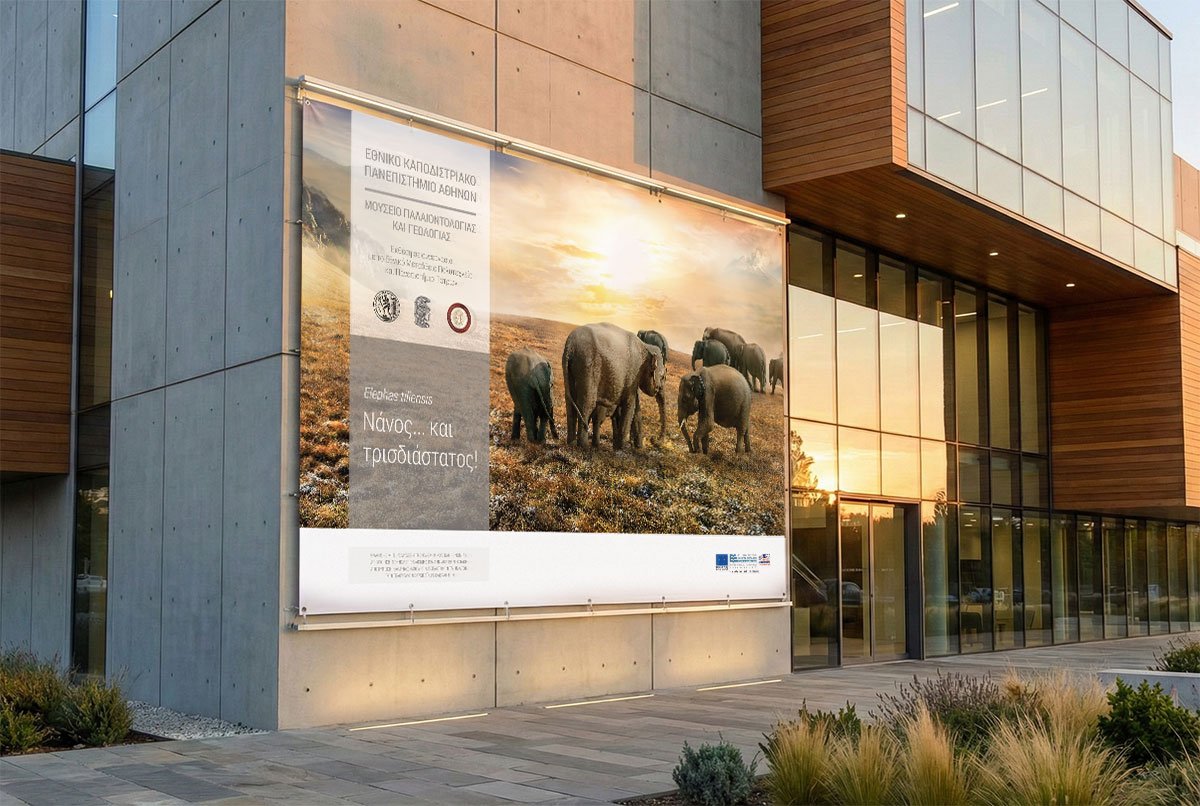
Art direction for marketing materials
-
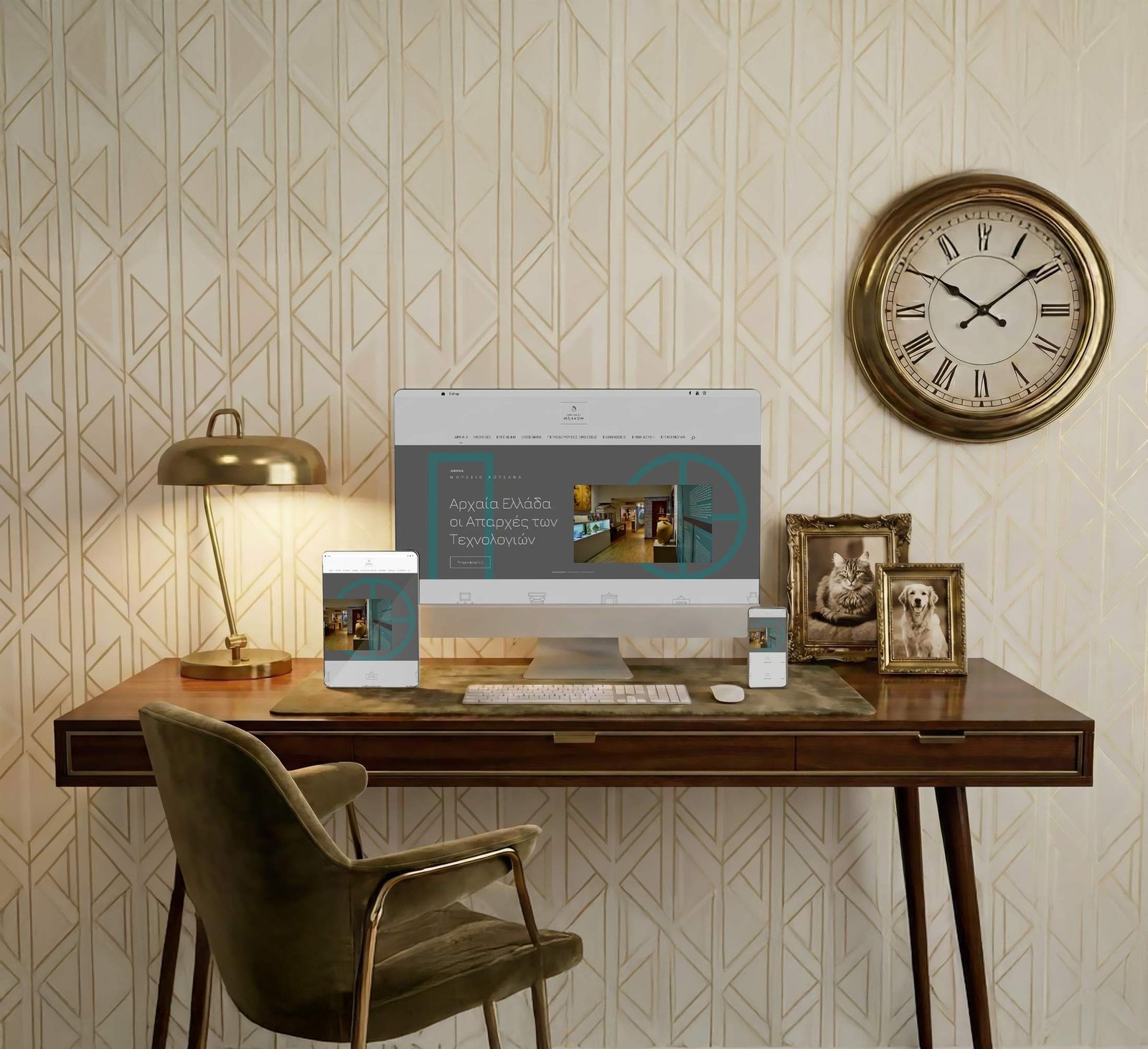
Design and development of the museum’s website
Concept & Design Approach
The museum’s artistic identity is built around Linear B, the ancient Greek script, used as both a symbolic reference and a unifying visual system. Carefully selected characters were assigned to exhibition zones and informational panels, directly reflecting the thematic content of each section.
This approach created a consistent visual language across the museum, strengthening the connection between the exhibits and their historical context. The script functions simultaneously as a decorative element and as a subtle educational layer, embedded naturally into the visitor experience.
The result is an environment where architecture, graphic design, and storytelling are fully aligned, allowing visitors to navigate complex technological narratives intuitively while maintaining a strong sense of historical continuity.
From research to system design: This video documents the process of studying Linear B symbols and translating them into a structured wayfinding and categorization system. Each symbol evolved from historical reference into a functional design element, guiding content, space, and interpretation throughout the museum.

Color System & Exhibition Zones
Color as orientation and meaning
Color plays a central role in the museum’s spatial organization. Each exhibition zone was assigned a distinct color, helping visitors intuitively navigate the building while reinforcing the thematic identity of each space.
- Hipparchus Room: Persian Green
Astronomy, medical technology, scientific instruments, and precision tools. - Philon Room: Muted Emerald
Telecommunications, robotics, automation, and early mechanical systems. - Ktesibios Hall: Cool Grey
Hydraulics, lifting mechanisms, geodesy, and cartography. - Archimedes Room: Pale Dogwood
Strategic games, logic, mathematics, and problem-solving systems. -
Ktesibios Room: Peach Sand
Measurement devices, military technology, and engineering mechanisms. -
Music Hall (Top Floor): Dark Burgundy
Ancient Greek musical instruments and sound experimentation.
This chromatic system works alongside the Linear B symbols to form a layered wayfinding strategy, combining color, typography, and iconography into a unified spatial language.


Outcome
The museum offers visitors a structured, immersive experience that reveals a lesser‑known aspect of Ancient Greek culture: its technological ingenuity. Through consistent art direction and spatial clarity, complex mechanical concepts are made accessible to a wide audience, while maintaining a strong cultural and historical identity.
The project stands as a long‑term example of integrated exhibition design, combining architecture, graphic systems, storytelling, and digital presence into a single, coherent museum experience.